Toscana Mouton Navas
petitetoscana@gmail.com
Nowadays it seems that nobody can remain ignorant to the coronavirus. It’s all over the place, everywhere, an invisible entity that covers all the corners of the world, waiting patiently in silence for the next victim. Is this a natural virus? Is it manufactured? Is it intentionally caused with premeditation to end the elderly population? How long will it stay with us? So many questions with thousands of different answers. The matter of fact is, we just can see the tip of the iceberg from our window, the rest of this biological horror is hidden. I think there is only a couple of questions that can be answered by the thread of logical reasonings, and one of them is: is the virus changing us as a human race? Indeed, it is. But for how long? Perhaps forever.
Death as part of life

“He who is not busy being born is busy dying” (Bob Dylan)
The Coronavirus is here to remind us about how fragile life is and slap us in the face to be conscious about the possibility of dying. This can create a tornado of inner feelings that can produce death anxiety. We desperately collect all of those things that remind us that we are alive, just like food and the end of it (toilet paper). It is not only the fear of us dying, but also the fear of the world dying as it is, the version that we consider comfortable and predictable. We die a little bit more every day, but we also celebrate the end of the day by going to that world of dreams and nightmares every night. But, how such a little invisible thing can kill more than Hitler, without compassion, but without preference? How can we deal with this invisible enemy that we don’t know how to eradicate? We are each time closer and closer to the world of the spirits, using alcohol as holy water to eradicate the demonic entity of this virus.
Collective unconscious
“The Collective unconscious consist of the sum of the instincts and their correlates, the archetypes. Just as everybody possesses instincts, so he also possesses a stock of archetypal images” (Carl Jung).
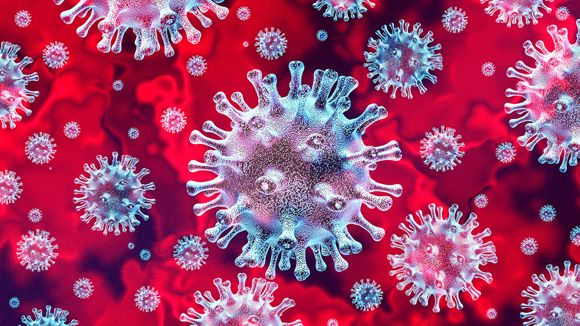
There are different archetypes that live in por unconscious mind (such as the mother, the father) and many more reflected in myths and legends that are represented in the shape of images. But then, what is the archetypal image of the virus? We have seen thousands of times that grey round ball with tiny pretty red flowers on the surface as the shape of the coronavirus. The present generation might generate an adverse reflex towards anything that resembles a dark circle. This is such a paradox; we can see the virus on TV thousands of times but we cannot face it in reality. That enemy that is, but at the same time isn’t, almost promoting a psychotic way to approach the world. so, how this generations will face this archetypal image of a virus? Will this be transmitted to future generations? Will this virus haunt our dreams, our decisions and motives for life in an unconscious level? It probably will.
Tactile emptiness

“Touch seems to be as essential as sunlight” (Diane Ackerman)
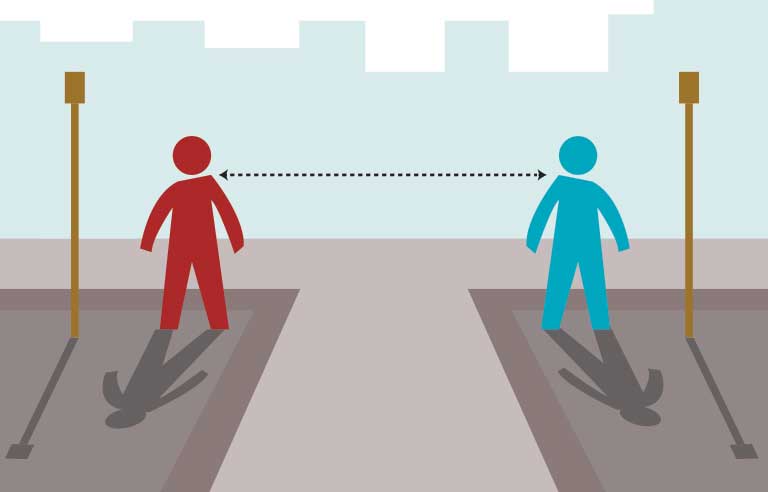
The social distancing that we are experiencing will have definite consequences in the long term of mankind. Think about the pregnant mother without the touch of their family or friends, and how that baby will experience the serotonin reduction on her mothers’ blood. Think about that child that stares through the window for months, anxious to touch the spring flowers, the dogs passing by, the hands of its grandparents. That lack of touch makes social connections rusty and dry, empty and simple. The language will have to safe us in its infinite enrichment of words to transmit what we feel. That couple that cannot touch each other and gets sick of sadness, we will probably see a lot of depressed skin, waiting to be touched again, even for that stranger on the bus that holds your hand when you loose balance and almost fall. Will these change us? Yes, I hope for the best. Perhaps we will start giving much more value to the contact with others now more than ever.
The eye kingdom

“A man’s feet should be planted in his country, but his eyes should survey the world”. George Santayana
The recognition of the baby though the eyes of the mother is the first step to the acknowledgment of being alive and being loved. The eye to eye connections that we are missing in our daily lives are reducing our awareness of being a living and sentient being. People watching you as soon as you go into the subway or that person that looks at you that will be sitting next to you on the plain are situations that helps us acknowledge that we exist, we are important, and we have rights. Without spectators, the theater of life loose its sense of existence.
Nature can breathe
“I think that I shall never see a poem lovely as a tree”. Joyce Kilmer
We have been spectators of how animals have returned to natural habitats and how they are also “invading” city spaces. We selfishly call it invasion because that’s our “territory”, but now we realize that “our” territory is the stolen space that we took from nature to modify it to our taste and live in it. Is the coronavirus the virus of the world, or is it us? The delimitations between the urban world and the nature world are progressively disappearing to make us remember that we are part of nature, not only from a social and cultural structure. Will the animal behavior will change after having more freedom and less human intervention? It is more than likely.
Work/Study from home

Yes, it is possible to be self-reliant and efficient from home as well. Of course, there are so many professions and occupations that cannot exist working from home. The stigma of the education through internet as inferior will change, as we can even see that Harvard and Oxford will teach online. Our perception of education and work will change now that there is evidence of the fact that humans can be free from the office, they can also be efficient and responsible, as well as students.
The perennial tragedy of distance
“Your memory feels like home to me. So, whenever my mind wanders, it always finds it’s way back to you” Ranata Suzuki
Distance is a painful symptom that immigrants and refugees experience every single day, and now more than ever, isolated families are experiencing the same feelings of the immigrants by being away from their own family, but in the same territory. Elderly parents waving their daughters and sons through the window of a residence reminds me of me and my mother waving at skype from different countries. Globalization and the frequent mobilization of people throughout the world to find a better life or to have their basic rights respected have created a more disconnected world than ever before. Perhaps I hope that people will become more sensitive towards immigrant minorities all over the world when they experienced the same pain of distance and hopefully governments will take measures about this. Sadly, the most likely is that the governments will strengthen their borders to contain this virus or other future diseases.
Future phobias

“Fear makes the wolf bigger than he is” German Proverb
As we already know, there are people that call themselves “germophobes”, and in some extreme cases, we have the cases of hypochondriasis, nosophobia, and other more extreme cases where a psychotic or manic breakdown can contain coronavirus elements. People struggling with mental health diagnoses could be affected for a spike of tremendous fear and anxiety towards the coronavirus, and It will be possible to see a spike of terror reflected on children’s drawings, psychiatric offices, murals and hygiene habits in the entire world. Mental health professionals will experience a higher percent of cases related with terror to this disease, mainly when someone loses a child, or a parent due to the coronavirus. Our relationship with germs will be affected permanently. Germs and viruses won’t be ignored as they generally are, and they will be part of the dark side of our psyche.
Religion as a passive spectator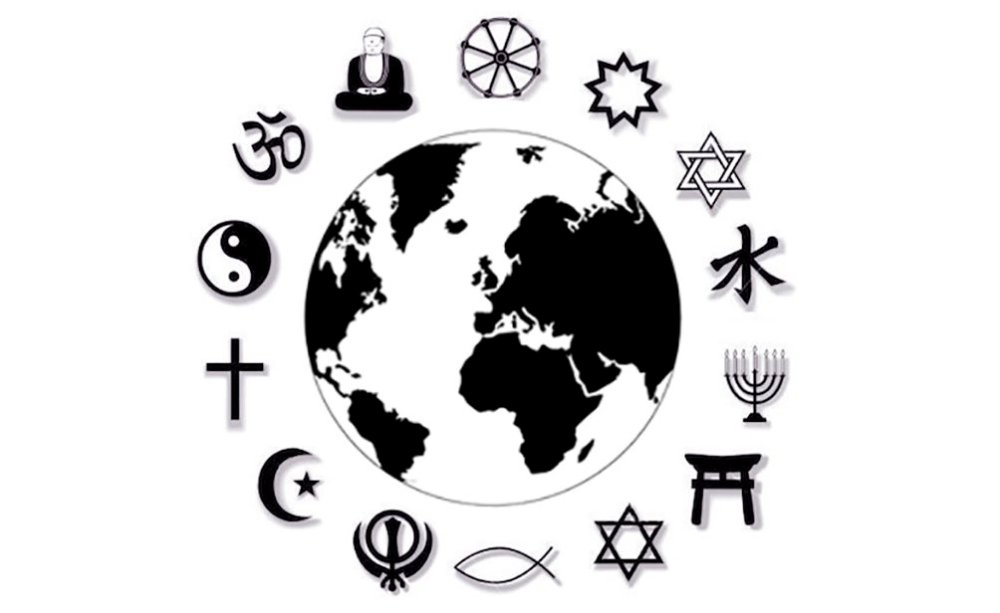
“When I do good, I feel good, when I do bad, I feel bad, and that’s my religion” Abraham Lincoln
With the containment and isolation that the entire world is experiencing these days, religion makes a U turn towards inner spirituality. The absence of congregations in religious spaces and also the absence of community and charity work will turn our beliefs (or lack of) inwards. We can think about these situations as a Tsunami. When an earthquake hits, our spiritual believes leave the shores of certainty, leaving an empty space of reflection and fear, waiting for a waive of uncertainty in God, Allah and buddha. The saints sit and wait for the prayers of the believers, the undead can hear the whisper of their living relatives calling for them. It is inevitable to experience an inner tsunami, as passive spectators of the catastrophe.
Darwin is laughing

“I was taught that the human brain was the crowning glory of evolution so far, but I think it’s a very poor scheme for survival” Kurt Vonnegut.
As we know from our biology classes, Darwin dictated the rule that defines our existence. Change and adaptation are necessary to survive. The coronavirus is pushing us as biological beings to modify our DNA structures to be more resistant to the ever-changing environment. I can only imagine Darwin in 2020, laughing of us, talking with CNN and Fox news about his theory, terrifying the crowds and giving little hope for the situation, accepting the situation, and perhaps hoping very deep inside of his soul for God to show up and fix all of this mess that we got into.
 againstindifference.com