Architectural fiction

Reality or fantasy, true or false, built or unbuilt, nonfiction or fiction.  Every piece of architecture created or dreamed of exists somewhere within these opposing words.  From the conception of a singular inspirational idea to manifestation of real space.  When and what denotes when a piece of architecture transitions from fiction to reality is not as clear.  The connotations attached to each of these words; reality or fantasy, fiction or nonfiction seems to call upon preconceived ideas embedded within.  This also seems to be playing both enabler and inhibitor of our ability to talk about architecture.  As the field of architecture progresses through new technologies these labels are being challenged by questioning not only what is real or fiction, but what makes architecture real?

Places are hence designated by nouns.  This implies that they are considered real “things that exist”, which is the original meaning of the word “substantive”.  Space, instead,  as a system of relations,  is denoted by prepositions,  in our daily life we hardly talk about “space”,  but about things that are “over” or “under”,  “before” or “behind” each other,  or we use prepositions such as “at” , “in”, “within”, “on”, “upon”, “to”, “from”, “along”, “next”.  All these prepositions denote topological relations of the kind mentioned before.  Character, finally is denoted by adjectives, as was indicated above. A character is a complex totality, and a single adjective evidently cannot cover more than one aspect of this totality.  Often however, a character is so distinct that one word seems sufficient to grasp its essence.  We see, thus, that the very structure of everyday language confirms our analysis of place (Schulz 1996).


This excerpt from genius loci is purely a dialect analysis of architecture and the way we can define it.  In this writing Schultz states that to define architecture, we need to look no further than the words to talk about it. Defining architecture only by the words, or types of words used to describe it, with the emphasis being placed on the relationship or experience from a individual’s perspective.  By defining architecture this way we are not arbitrarily classifying what is real, but uncovering what is real or true through the language.

Schulz, in his essay Genius Loci theorizes that architecture is defined by; nouns, prepositions, and adjectives.  Each of these linguistic tools allow for architecture to become real through described experience.   The use of nouns describes real tangible objects within architecture.  A wall is a noun and therefore absent of the individual perspective until the inclusion of prepositions.  These allow for referencing the relation of the wall to one’s self; i.e.  over, under, beyond, behind.  Prepositions allow and build the foundation for which experience is conveyed and described by establishing reference.  Lastly The use of adjectives to describe character of both the previously used nouns and prepositions e.g. the coarse masonry wall acts as a back stop to the sunlight, which highlights its texture.

In this analysis one can see the fundamental role that “nouns” or real tangible objects play in establishing architectural experience through prepositions and adjectives.  These latter two linguistic tools, prepositions and adjectives makes an emphasis on the individual through reference by never forgetting the importance of the self.  So, in this we see a multipart definition of truth.  Nouns being of objective universal truth and prepositions along with adjectives based in empathy.  The question left is whether one can exist without the other and still be “true”.

New advance in fields like virtual reality(V.R.) have brought to light this question of what does it mean to be real?  Or how do we now define fiction?  Now new advances in V.R. allows for visceral experience that are approaching if not rivaling what was previously thought to only be accomplished only through “reality”.   This challenge or rethinking of our reality shows not only the relevance, but the importance of Schulz’s writing.  If we apply this analysis to virtual reality, we still use the same language.   In fact, it may only be through words that architecture can exist.  Through this melding of space and words, one being defined by the other do we get architecture.  The irony being that words themselves cannot be true or false, yet they can be both reality and fiction.

Questions about Questions

I have recently taken up an new habit in which i take images like the one above and take a sort of snapshot of my initial thoughts.  My knee jerk reactions are then reviewed as I take a step back.  Often times I then interrupt my wife from her writing and online discussions a she is doing for her masters degree while she works a full time job(sorry Toscana) to bounce my ideas off of her and get her opinion and reaction/critique.  I value her input greatly for not only is it an outside perspective, it is  a psychological perspective(from which her Bachelor degree is in) and from her perspective of living abroad in very similar conditions in the above picture.  This  usually gives me a pretty good exercise in perception and analysis and basically helps me with my understanding.  So in a way I am  treating this exercise as a sort of Rorschach test.

Recently I received my master’s degree from the School of architecture and Design at University of Louisiana at Lafayette.  So i spent 6 plus years immersed in Architecture studies and now I work in the field of architecture.  I still have a long ways to go until I am licensed and can even call my self an architect.  Even if and when that happens i don’t know if I will fully identify myself as an “architect”.  Not because I don’t like the term or the profession but because I feel like it is limited by the perception of what we truly and are taught in the invaluable studio environment.  The image or architect stereotype is so attached to the idea of a building or object  that I feel it undermines what we can do.  It is similar to those memes of professions what you do versus what your friends and parents think you do.

During my time spent in architecture school i gravitated to this idea that was constantly pushed that we had to discover the right questions to ask before we could propose a project/building.  This really stuck with me, this idea that what separates us, from those who studied say engineering or biology .  Is the idea of questions holding value and priority over pre established answers that really interested me.   I know that this can come off as rebellious, and i know I tend to lean towards the rebellious side.  Hell my own thesis was a rebellion against the defined values of architecture by questioning if it had value?  So in a way I felt the architecture itself was the question.  This i feel is in complete contrast to Architecture’s image now. With it typically viewed as a solution or answer.  It prefer the idea of architectural insertion as a proposal or the way in which a designer as addressed an issue through deep questions.  Maybe this means it will attempt to resolve a problem or it can be part of a bigger dialogue or question.

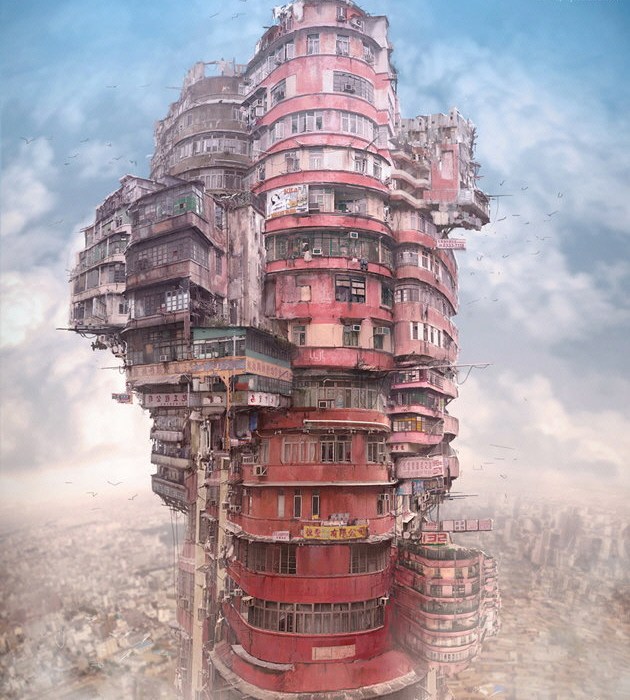
Now that i have laid out a little bit of context to my approach I can talk about the image above.   My first thought when I saw the image was a typical Latin American fevela/barrio and a typical residential high rise.  Something else I saw was a typical problem linked to poverty and impoverished countries and a architectural solution, a symbol of modernist architectural solutions for housing.    The solution being based off of ideals that I myself being from America and also being a student of design and architecture know well.  A building like this addresses a lot of problems that are associated with the other side of the image.   With these ideas I I began to discuss, with my wife toscana my ideas based off these reflections.  Starting with the idea or questioning of the success or perceived success of this high rise tower.  I believe this is due to my rebellious nature, but I also felt justified in my questioning.  The difference between now and my protected bubble in architecture school was that now I have access to real time feed back from a different perspective that actually experienced this scenario.  So I  have heard the stories of people being robbed all time, including my wife and her friends and the flawed structures.  I also know that living in countries outside of the U.S. sometimes means buildings like these do offer safety and security and they are viewed as a solution.  However I still pushed with our discussion because I still feel that even though I know the  building on the right is a viewed as a solution the  question still remains whether it is a correlation or a causation.

This questioning is the same approach I initially applied to the left side of the picture.  I found that i was struggling with the image of the left being so directly associated with the cause of the problem.  I personally struggled with the idea.  For I knew from stories of first hand experience that places like these do suffer from crime and are generally inhabited by people suffering from extreme poverty.  That part is obvious from the handcrafted do it yourself structures and overall organization.  But that is exactly the aspects that  sparked my curiosity and questioning.  As I looked at the two sides I could not help but be drawn to the interesting ways in which people address their problems.  They embody a textural richness and a organic component.    Along with all of this they, meaning the Latin culture in general, have a strong and unique culture and focus on family, centered around intense socializing.  People are engaged with each other like nothing I have seen over here, even though I am from the south I find the sense of community  pales in comparison.  They are also very altruistic and usually put the success of the family and siblings above all else.   The fact that places like the left side of image embody both the negative aspects of crime and poverty and the positives of rich culture and community overall challenges my ideas and perceptions.

Towards the end of our discussion I sort of realized that issues I have may stem from my own perceptions.  I found that I am associating this building on the right with the ideal version or solution for housing in countries like my own.  This for some reason does not sit well with me.  It somehow feels like a missed opportunity and possibly a mistake.  Even though we have achieve great things as a country and culture.  I do not feel that this should merely be copy and pasted abroad.  This method not only can be insensitive issues inclusive and unique to different cultures and countries but also I believe grossly irresponsible on our part.  What I mean by that is knowing what we know now about environmental issues and the massive miss use and waste of resources. We have a standard of living that may not be realistic for every one in the world to have.  In that aspect we have to admit that we cant provide every one in the world with our standard of living,  finite resources and  economics makes that clear.  But even with this I still feel optimistic. Which is an ironic trait for architects to have because it exist directly along side our cynicism that makes us always question.

Overall after looking at this image and writing about it for the better part of the day I feel that I have some clarity on my initial reactions to it.  In it I see two contrasting elements that in them selves have so much association to things like problems and solutions.  I feel that while I am cognizant to these  and understand the driving issues I cant help but feel a sense something is being missed.  That there are elements of great value within the communities and culture that we are attempting to help by solving their problems.  We are blind to them not because we choose to be but because we just don’t understand.  Within these communities lay a completely unique set of values and culture that if giving the opportunities and help though resources can yield not only solutions for them selves but possibly lead us to a better world.  This would call for possibly a more holistic approach as designers  that priorities smaller insertions through multiple areas and multiple scales expanding beyond just simply architecture or the built environment.  Its not about what can we teach but what can we learn.  It may call for less solutions and more questions.

“Ecology, the new opiate for the masses”

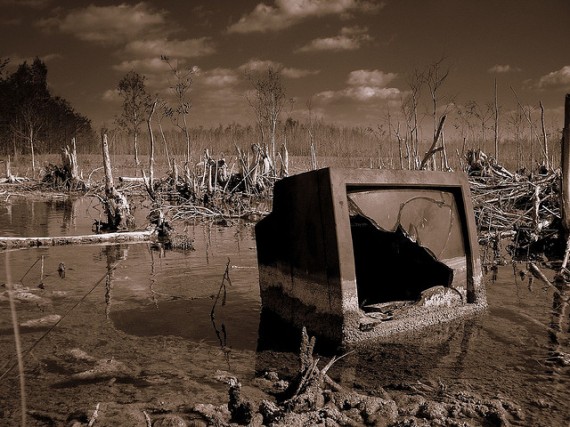
The above title is a quote from author and philosopher Slavo Zizek.  I first stumbled across him and this quote in a documentary about philosophy called This Examined Life. The movie is broken into about 5-6 chapters with each one focusing on a different present day philosopher.  Each section’s focus is completely up to the individual as far as the topic and location of the “interview”.  Zizek’s interview took place in a land fill and he spent most of his time describing how the new ideology of ecology may not actually solve the great environmental problems that we face.

I found this view point to quite provocative as it challenged my ideas about environmentalism and  sustainability as it relates to fields like architecture.  Especially with two specific points Zizek made. The first point Zizek made that i found interesting is that our current approach to sustainability Idealization of nature.  He claims that by we have reached a point were we have compleetly remove nature from humans and the environment we have built.  In a way it allows of to separate not only our destructive behavior but ourselves from nature.  By doing this we reinforce this idea of nature as a always balanced peaceful element.  It allows us to compartmentalize our destructive behavior or nature’s for that matter.  Doing this allows us to separate and remove the ugly realities of our consumption.  We take things like trash dumps and industry that is not pleasing to this image and remove it from sight.  Therefore becoming more aout keeping up this idealized image of nature.  This I feel leads to pseudo solutions that promote imagery over tangible action.  If we were to embrace the fact that we are always in nature and that what we do and where we live is the nature that we have built including the ugly aspects.  We may force a little more self reflection that will make us care a little more about actions taken and waste or trash.  Hell we may even find some beauty in it.

The second point I gravitated to way that we has humans have an ability to disavow serious issues.  I believe currently we are experiencing  this on two levels.  The first being that both sides seem to have come to an agreement on the fact that there is some level of climate change,  but there is still a debate on whether or not what is responsible for that.  Well if you align yourself with the side that believes it is 100 percent part of naturally occurring cycle you have and in a way relinquished responsibility for the serious implications of this change.  This can position often times is even taken in the face of overwhelming evidence of real catastrophic effects.  For me this is a method of denial, for it places the cause or meaning to something outside or above us humans.  Whether or not you believe this is purely natural or part of a higher powers plan.  They are basically taking the role of neutral  observer.

The other side of the climate change suffers from the same disavowment.  For we see the evidence of our impact and still address it in a way that does not negatively impact our standard of living.  I do not want to what i am saying to be confused with a negative technology stance, because that is certainly not my stance.  However I feel that peoples reliance on technology advance seem to lean more toward areas focused almost soley on efficiency of existing products and production methods.  As apposed to a combination of issues pertaining to cultural problems that have lead us to where we are.  Of course any progress towards efficiency is generally a positive, but in most instances this progress comes in the form of indulgences.  An example of this is smart windows or even electric cars.  Dont get me wrong I love tesla as much as the next guy, but electric cars do not address real issues within car culture or sub urban sprawl which facilitated it.  It merely allows a person to participate in the same habits as before with a little less guilt.  So even if we know that there is a real problem  we don’t do anything about it. The end product being a return to apathy.

This is where my field of study comes into play.  Technologies like solar panels and geothermal systems have all seen great advances withing recent years.  It was not until recent advance in production and cost reduction that they became commercial viable and therefore have sen an increase in use.  The use of these technologies where always pushed by fields like architecture and design because generally the values embed in these fields promote sustainability.  These values however sometimes clash with those of other fields that work along side architecture.  So great effort has been put into framing arguments that would be convincing of even the most critical opponents that did not quite see the value in sustainable design.  I even remember taking classes in Graduate school dealing with this very issue.  Thankfully we are now seeing the tide turn as these technologies has lowered their cost to were they are being used more and more.  I feel that even with this victory it somehow doesn’t solve the issue or may even highlight a bigger one.  For me the fact that these technologies were only embraced when there object cost was low enough to justify in a way highlighted our collective enabilty to see or quantify there true value.  This value was slightly subjective because sustainability causes and climate change issues deal with the collective well being and are not factored into a developers bottom line.  So i feel in a way that the well meaning nature of these sustainable technologies has somehow been co-opted.  What I mean by this is that even though we may have been successful in getting more green sustainable strategies into a project it comes at the cost of conforming to the value sets of others.  Minds have not been changed nor values or goals.  Even with this success we are only successful in lowering the cost of a product.  This does not mean that a developer has began to look at projects differently or that they will now embrace values that drive an architects design decisions.

My views maybe a little cynical but i feel that by conforming to these value sets and justifications we place importance on bottom line cost.  This is were apathy and indifference take foot because we live in a system that generally only quantifies monetary cost.  I feel that as a collective we have subsidized the true cost of things like unsustainable built environment and unsustainable methods of living.  By falling into the same system we remove the negative effect and therefor lack care.  We stay indifferent.

Inequality part II (benefits beyond guilt relief)

My previous post began to touch on the issues/paradoxes within charity.  It discusses the convoluted motivations and incentives behind giving to organizations like NPOS.  As i previously stated I have an education in Architecture and design.  This as lead me to be very passionate about this subject for i view it has the ultimate problem to solve.  That embodies issues ranging from social, cultural, economic, and environmental issues. So it is not a surprise that I am truly passionate about the issue of inequality and the selfless work that NPO’s and NGO’s do.

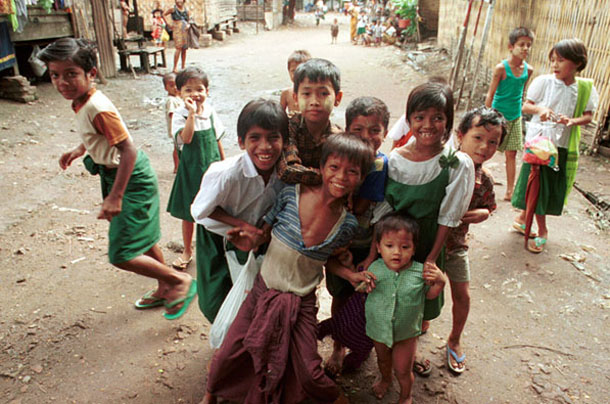
When I look at the picture above what I see is a pure and genuine happiness.  I also can not help but see conditions that from my perspective can seem for below a standard I have become accustom to.   This picture  can conjure a range of emotions with people.  Emotions that can possibly range from happiness due to the infectious nature of their smiles, to the guilt for their less than acceptable living conditions.  Recently I have slowly  been experiencing a a sense of envy, optimism and opportunity.

These emotions have caught me by surprise and are more than likely related to my own internal questions about true happiness and issues of materialism.  Now I when I say that I am experiencing emotions like envy and optimism I am not speaking from a minimalist ideology that promotes happiness through reduction.  The envy I have comes from, or at least what I believe it comes from, is their remarkable ability to produce some much happiness with so little.  In capitalist terms they have an incredible R.O.I(return on investment).  Meaning that i do not believe their happiness comes from having nothing but that they have found a way to either A. produce happiness from very little, or B. challenge or remove the correlation between happiness and typical objects associated with quality of life.

The second and third emotions of optimism and opportunity are linked to this envy.  In this image I see not only lessons but how we have allowed guilt and pity to drive our attempts of charity and help in the wrong directions.  As I mentioned in previously post I have growing issues with preconceived ideas of happiness and success embedded in me.  Along with these I have voiced my concern and acknowledgment that in order to address inequality we have to ask what we are willing to give up.  I feel that these ideas and questions may  be impossible for us to answer or address on our own.  For we have built a system that is governed by a different set of incentives.  This is not to say that they are wrong or that what we have is bad, but just that these incentives produce certain results and that wont change.

So in this image i see an opportunity to not only help but study.  I see a set of values and culture unique from our own.  I see an opportunity build off of this system being mindful and careful to not impact it or corrupt it.  I see an opportunity to learn from them in order to better our selves.  I see an opportunity to not make them like us.