Inequality part II (benefits beyond guilt relief)

My previous post began to touch on the issues/paradoxes within charity.  It discusses the convoluted motivations and incentives behind giving to organizations like NPOS.  As i previously stated I have an education in Architecture and design.  This as lead me to be very passionate about this subject for i view it has the ultimate problem to solve.  That embodies issues ranging from social, cultural, economic, and environmental issues. So it is not a surprise that I am truly passionate about the issue of inequality and the selfless work that NPO’s and NGO’s do.

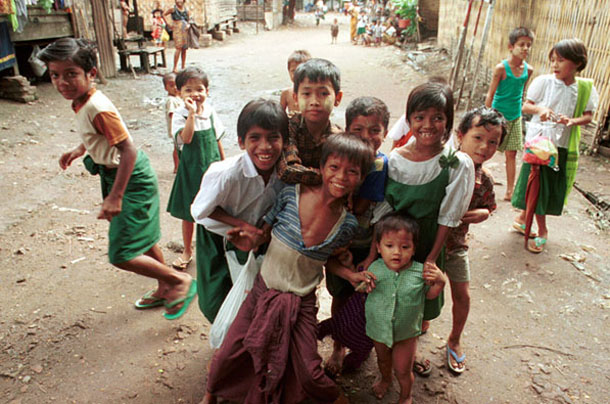
When I look at the picture above what I see is a pure and genuine happiness.  I also can not help but see conditions that from my perspective can seem for below a standard I have become accustom to.   This picture  can conjure a range of emotions with people.  Emotions that can possibly range from happiness due to the infectious nature of their smiles, to the guilt for their less than acceptable living conditions.  Recently I have slowly  been experiencing a a sense of envy, optimism and opportunity.

These emotions have caught me by surprise and are more than likely related to my own internal questions about true happiness and issues of materialism.  Now I when I say that I am experiencing emotions like envy and optimism I am not speaking from a minimalist ideology that promotes happiness through reduction.  The envy I have comes from, or at least what I believe it comes from, is their remarkable ability to produce some much happiness with so little.  In capitalist terms they have an incredible R.O.I(return on investment).  Meaning that i do not believe their happiness comes from having nothing but that they have found a way to either A. produce happiness from very little, or B. challenge or remove the correlation between happiness and typical objects associated with quality of life.

The second and third emotions of optimism and opportunity are linked to this envy.  In this image I see not only lessons but how we have allowed guilt and pity to drive our attempts of charity and help in the wrong directions.  As I mentioned in previously post I have growing issues with preconceived ideas of happiness and success embedded in me.  Along with these I have voiced my concern and acknowledgment that in order to address inequality we have to ask what we are willing to give up.  I feel that these ideas and questions may  be impossible for us to answer or address on our own.  For we have built a system that is governed by a different set of incentives.  This is not to say that they are wrong or that what we have is bad, but just that these incentives produce certain results and that wont change.

So in this image i see an opportunity to not only help but study.  I see a set of values and culture unique from our own.  I see an opportunity build off of this system being mindful and careful to not impact it or corrupt it.  I see an opportunity to learn from them in order to better our selves.  I see an opportunity to not make them like us.
The paradox of inequality

Social issues like addressing inequality go with the architecture field like (insert comparison).  I myself am not immune to draw of these issues as well.  They carry with them a sort of holy grail of problem solving for the problem is so great and at times seems like most efforts are similar to a two steps forward one step back approach.

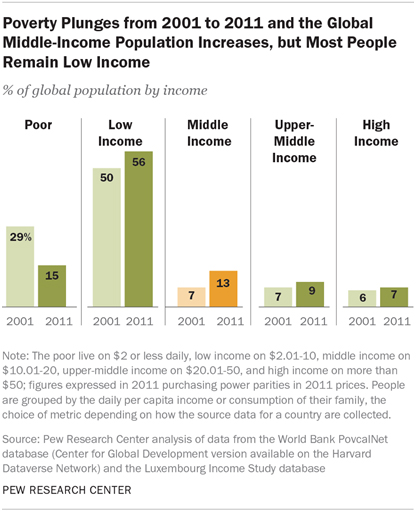
Total giving to charitable organizations was $373.25 billion in 2015 (www.charitynavigator.org).  This is statistic can make one feel warm inside because it is evidence of humanities willingness to give.  But at the same cause concern since poverty and inequality is on an upward trend as seen below on a chart put out by PEW research institute.  Even though the percentage of population considered poor the amount of people considered to be how low income(less than $2 a day) has grown.

PG-2015-07-08_globalClass-00

For me,  looking at this chart brings to light a bigger issue.  Anybody can see that no matter what combination of statics the numbers will add up to 100.  What is not very clear in info graphics like these is the very realistic scenario of finite resources.  this means that the best case to hope for would be perfectly even distribution.  In here lay the problem, as one can see in the text below the graphic that the numbers attached to those categories represent an exponential curve.

So getting back to issue of inequality and how architecture through  NPO’s address it.  It is not a bad thing to want spread American prosperity to the world.  I mean  I am not saying that “we” the good ole USA deserve iphones and caramel lattes and no one else.  Quite the opposite, for instant who even decides if anybody deserves these luxuries, or whether or not another culture believes these “luxuries” improve quality of life.  In a way its almost ignorant to assume they attach happiness to materials like we do.

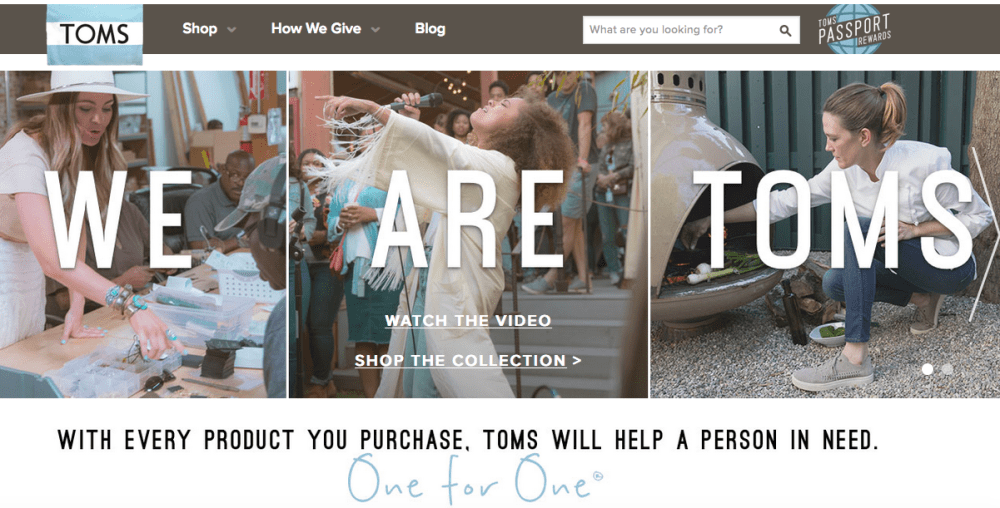
Sitting down to write about this has brought up three paradoxes for me.  The first being that even though I am truly grateful for being born into the circumstances I sometimes question how much happiness or quality of life comes from these “Luxuries”.  Don’t get me wrong I love my iPhone, but i have to question if the time spent checking reddit and Instagram is worth the time im not spending with my wife or family.  The second paradox is that I know that in solving inequality is not as simple as giving people iphones and internet.  In order for me to even afford a cheap iphone some body in a less that fortunate situation has to make that Iphone for far less than i would be willing to do it.  Its the sad truth that part of success is built of the misfortune of others.  The third paradox is the possible ideology behind charity.  Take for example the business model of Tom’s shoes.  Screen Shot 2017-04-20 at 9.00.30 PM

I do feel that the idea behind Tom’s is genuinely good.  It is hard to argue against giving shoes to people in need.  However a problem arises when looking at the slogan.         “With every product your purchase.  Tom’s will help a person in need”.                                      This slogan in a way is oxymoron because in order to give a pair of shoes to someone in need the shoe has to be made by a person in a third world country for a wage that would insult most.   Even with this I know that there is some good in providing jobs and a new possibility for employment for these people.  But…. I also can not help but seem the real transaction taking place and that is guilt relief for material possession.  This is a particularly complex issue, for I am not claiming to be against a business that is prosperous and also does some good and in a way convinces people to be charitable more often.  I am however just pointing out what may be the true motivation behind most charitable actions and that is a way relieve guilt for other wise excessive behavior.  It allows one to thwart  healthy self reflection on whether I need another pair of shoes, or the true value of that 5 dollar latte.

What does this all mean?   Well if i truly am passionate about addressing issues like inequality I have to question what am I willing to give up?


#ThirdWorldProblems

So, My husband has made a great analysis of the main #FirstWorldProblems, and now I will proceed to describe my #ThirdWorldProblems. First of all, I don’t come from a regular third world country, I came escaping from a dictatorship that rejected anything that was not red, socialist or revolutionary. I come from Caracas, Venezuela, one of the most dangerous cities in the world, and at the same time one of the most beautiful ones. Arriving Caracas is like  dating a beautiful famous model with addiction problems and bipolar disorder. Yes, the country is polarized. Yes, half of the people is happy with the status quo of not having enough food, medicines and high levels of devaluation, and the other half, isn’t.

Third world problems are more characterized by the “lack of” something that is attached to a heavy fact: “uncertainty”. Lack of social and health services, lack of water, lack of security for the people, and much more. All of the lacks causes an urgent feeling of hopelessness that is fed by the uncertainty to obtain something that is VITAL for the organism, such as all of the needs that Maslow proposed are the base of a pyramid, that includes water, food, shelter and a sense of safety. Uncertainty gets into a shape of a social tumor that is very hard to kill in third world countries, causing emotional and physical mini crises that end up by making implode the fragile contention walls of patience and survival of any normal human being.

All of the questions exposed in my husband’s text, are questions that I also asked myself many different times meanwhile living in Venezuela; such as: should I be happy with what I have? many people have much less (80% of the country is poor, aprox. ) and I am here whining about……about being robbed several times a year, about not having the possibility to be independent with a regular salary meanwihle having a degree from one of the best universities from your country (UCV), or not being able to just buy a car so I can take my family for a ride to the beach after all of the effort previously done. Yes, I was 30, and I never had a car in my life. Went through high school, College and Work without needing a car. Is this hard? yes it was occasionally, but of course, having a benefit in poor countries is also a threat. The threat of uncertainty, it might get stolen, and you might end up dead by a piece of metal made in China.

So, 1st world problems are the ones that 3rd world people wish to have. 1st world problems are not much related with “lack of” or “Uncertainty”, they are created by clashes between objects, beliefs and functions that seems not to match, or seems not to express happiness or being able to give positive reinforcements. The “Lack of” and the “Uncertainty” to obtain seems not to be there. 1st world problems are more related with the hardships to keep supporting the happiness that we have through the “reinvention” of objects. No more simple Black coffee, More caramel macchiatto with coconut milk. No more Blackberry’s, More and new adapted to our “needs” Iphones.

No more simple computers, More laptops that you can carry, break in half, sign to them and have smart replies when you don’t have anyone to talk to. 1st world problems are more complex, and they get more specific because the availability of the components is there, and there is no uncertainty. When there is no uncertainty, boredom comes to fill up the life of the regular 1st world citizens. Certainty is desired by the 3rd world country citizen to be happier, and the lack of certainty seems to be one of the reasons of boredom in first world countries. Of course, 3rd world country citizens feel thrilled with whatever thing they have obtained, the uncertainty is reduced. 1st world country citizens feel thrilled when certainty  is replaced with new and improved things, because they truly deeply know, that dealing with uncertainty can be severely debilitating for mind and soul, as they watch on TV and news from foreign countries. I do understand this point of view, because this is what I wanted. I wanted certainty, I wanted peace.

With all of the previously exposed, I wanted to express that, It does not matter where you were born, or where you live, you will always have this constant dialog of happiness-unhappiness, constant comparison with others (coworkers, relatives), should I be happy with what I have or should I strive for more? Probably the answer is in all of us. a balance of having what is basic to life, and a challenge to obtain only the things that are really important to us (material or ethereal).

#firstworldproblems

I’m going to preface this post by stating I have never been abroad and my life experience is limited to the US.  With that said I find my self growing more and more curious and almost envious of other cultures and the lifestyles or assumed life styles and value systems.

The Hastag firstworldproblems was introduced maybe a year or two ago and is a product of our post modern/ironic culture here.  With this hastag people make observation of situations that are supposed to be little annoyance of living in a first world country with quotes like:

I hate when I run out of things to look at on my phone before I’m ready to go to sleep 🙃


Statements like these are meant to funny and some what enlightening of our fortunate situations.  In a half joking have serious kind of way.  Statements like Firstworldproblems fall into same area as a humble brag for me because  ultimately they lack sincerity and the enlightened insight that they attempt to convey,however ironic it is.

Recently the Firstworldproblems campaign took on this problem by producing a video were people who actually live in “third world” countries read back post with the hastag, therefore pointing out the ridiculousness of American excess.  I can only assume this campaign’s aim is to force people to think about the own bloated lifestyles in comparison to other countries.  Also the might possibly get some to engage and donate to causes that help.  Which by all means is good but…….

I feel like there may be a bigger issue lurking within this simple hastag.  For me the real problem I have with it, is that it brings to light all that is wrong with our perceived happier more successful “first world problems”.

Like the statistic that 767 million people lived on less than $1.90 a day.   I really do not know what is more troubling about this statistic.  The fact that I know that my first world life is made possible because 767 million people live on less the $2 a day or that I immediately  make an assumption that these people cant be happy.  Or that i have a better life than them.  Or the fact that my selfish pursuit of trivia material objects is responsible for the financial  suppression.

We reside in a system that has produced great vast amounts of wealth.  But i do not feel that directly translates into happiness.  I admit I thought that this system would generate happiness and success for me.

I Recently graduated from graduate school with a masters degree in architecture. After which I moved to a city and excepted a job in my field of study.  I studied  long hours while working 1-2 jobs through college and lived in a small apartment because I wanted to better my life.  I choose this route because I enjoy furthering my education but also because it is the American path for success.   Well now that I’m finished and moving into the next stage of my life I can say that i do really enjoy the city i live in and the house I rent is a great upgrade from my previous place but….   While i do live in a big city and a nice house, These things cost more and because I choose to pursue higher education I now have 70 + thousand in student loan debt that I will have to pay off.  All in all I feel like I am in the same scenario with different, albeit better scenery.

Ultimately I realized I  enjoy the vibrancy of the city and the unique sites I get to see.  I enjoy the people and the culture.  I enjoy time spent with my wife and when family visits in this positive environment.  Not the  cost of this  huge debt, unnecessary amenities, and the stress of bills living paycheck to pay check. I set out on my journey to success by pursuing a false baseline for happiness and success.  Set not by myself but by our own collective society.  I have realized everything that most things that make me happy don’t cost and the things that cause me stress and anger are in a way self inflicted.

In a way we pursue happiness through inanimate objects and material based pleasures.  We have built and engineered a system that demands it.  Its the same system that brought us to where we are today as a country.  It is also the same system that relies on exponential growth and things like for profit,    well everything.  All in all i question whether we are as happy as we think?

This brings up tough  questions for me.  Like how do i feel knowing that my elevated lifestyle is directly proportional to someones lowered lifestyle?  Or the fact that life choices i make don’t necessarily lead to happiness and may lead to the opposite.  Its making me consider why these people cant be happy with 2 dollars a day.  I have no idea how happy they are.  I can only judge from of the money the make which is now our ridiculous barometer of happiness.

……So yeah its complicated

WHY CARE?

This week I was listening to a podcast called Invisibilia while working on projects.  The episode that i was listening to was titled something like Frame of reference.  In this episode they at three segments in the first one the host introduced the episode by talking about how important reference or context is in shaping the individuals world.  This context is what often leads to misunderstandings of how people can perceive things differently  and how some may come off as insincere to someone’s situation.

Of course as i listened to the podcast I thought I knew where they were going with this.  Maybe they would tie it into the recent political environment or social/cultural rifts.  I was however wrong as the host began the next segment with an interview of a comedy central news show correspondent Hasan Minjah.  In this interview  the host and guest spoke of the relationship with immigrant parents who viewed the world from a completely different perspective or reference that at first glance seemed to belittle their daily concerns or struggles.  I found myself empathizing with both of them and and making connections to my own experience with people in my life that seem to lack the ability to see things from my perspective.

While listening to this podcast I couldn’t help but think about a act on Dave chapelle’s new comedy special.  He begins by talking nostalgically about the care bears and how they solve problems by using their super power which was caring hence the name.  As i kid i never really thought much about it( the care bears), hell i didn’t even remember that caring was their super power.  Back then it really did not seem like caring could be a super power.  I mean come one every one has the ability to care or have sympathy.

With that thought running through my head the third segment began with the introduction of a 54 year old doctor who began to tell the story of her childhood.  She told the story of a troubled childhood as she struggled to fit in and always tried to figure out ways to adapt and almost treated it as an experiment or investigation.  She eventually figured out ways to make due socially and chalked up previous experience to her higher intellect being hard for others to understand.  Well the story takes a turn once the women discovers she has Asperger’s disease.  She comes to this conclusion by taking part in an experimental medical therapy for depression.  This therapy involved magnetic pulses that would activate certain regions of the brain.  A set of questions and phases where presented to her before as a control and after the therapy to measure results.  These question and phases were set up to mimic real life scenarios that were examples of heightened emotions ie. fear, happiness, concern.   The guest discussed one of the examples as a some one “asking is that a gun?”.  It was not until after the therapy began and the same phase was presented again that it was a person being robbed in this example.  This context was totally new to her as before she read the statement as if it was a generic question with no emphasis or concern.  She was overcome with emotions that she had never felt before and suddenly realized that not only was she missing a significant part of human interaction but that all of her childhood troubles to fit in more than likely stemmed from her minds inability to pick up on subtle emotions that conveyed what a person is truly communicating.

At this point I realized that I my self have not truly appreciated the ability to care.   This women, who never experienced it before presented it like it was more than just a default ability to pick up on subtle emotional cues inherent in everyone.  It was a super power.

First blog post

This blog is intended to be a collection of thoughts, feelings and personal opinions that arises everyday in our magically and ordinary life. We are Thomas Mouton and Toscana Navas, we are a multi cultural couple living in a world that tries to isolate itself inside of digital screens and massive plastic cubes of food. Thomas Mouton is from Carencro, Louisiana, a small town where he grew up trying to become a rebellious bayou hipster, and Myself, Toscana Navas, A complex Latina women born in Caracas, Venezuela (one of the most dangerous cities in the world) that loves carbs and ridiculous old movies with bad effects. Thomas is an Architect, And Toscana is a Psychologist (in Venezuela) and a future counselor in the United States. We are both in our 30s (we will not specify the the second digit) and we are thankful with all of you for stopping by and read us and make us part of your life (Always hoping that in a good way). Thank you for stopping by!